'%20d='M32%203C16.4%203%206%2015.3%206%2031.2c0%2010.9%206.6%2020.1%2014.3%2026.2L32%2077l11.7-19.6C51.4%2051.3%2058%2042.1%2058%2031.2%2058%2015.3%2047.6%203%2032%203Zm0%2014c-8.8%200-14.5%207-14.5%2016.4V55h29V33.4C46.5%2024%2040.8%2017%2032%2017Z'/%3e%3cpath%20fill='%23C99B4A'%20d='m27.5%2055%204.5-24%204.5%2024h-9Z'/%3e%3c/svg%3e)

The pub’s story
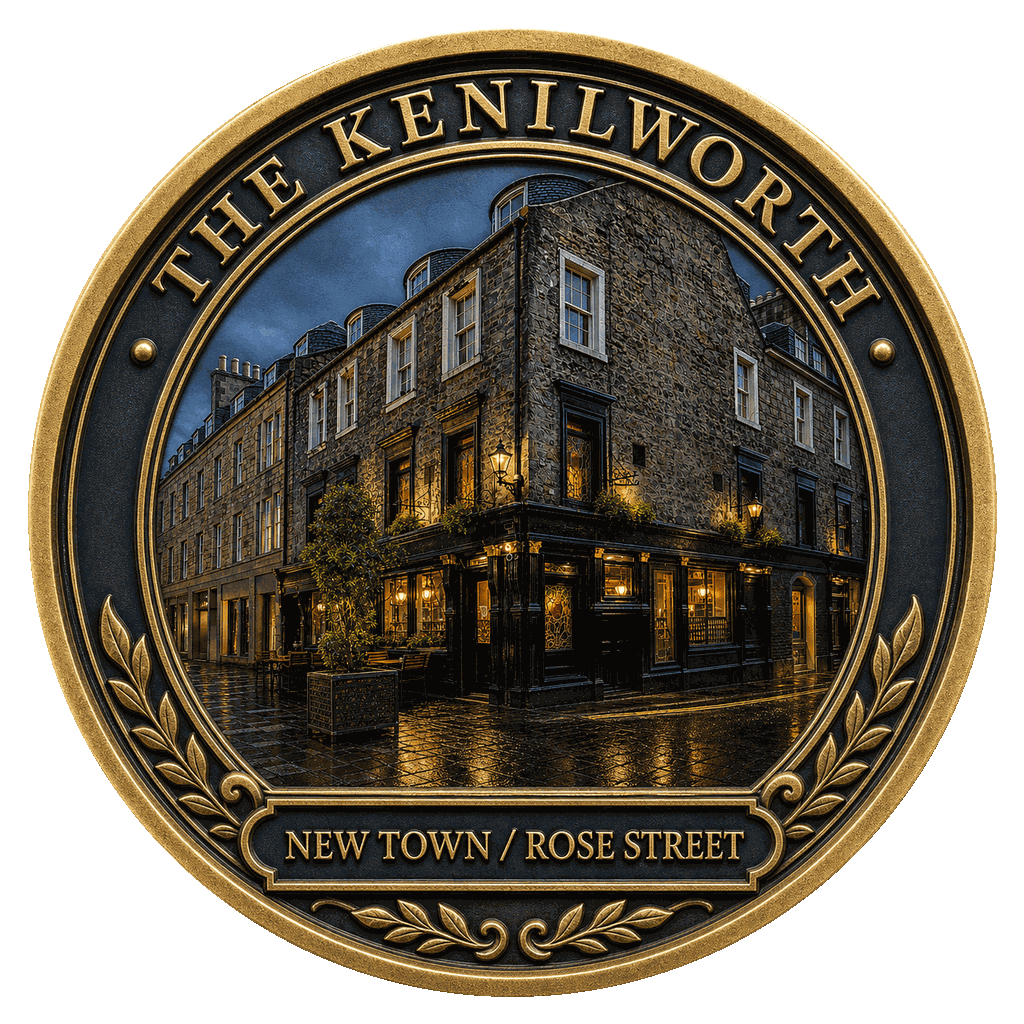
The Kenilworth is Rose Street’s great single-room heritage pub: a Category A-listed Victorian interior still functioning as a working cask-beer bar. Historic Environment Scotland separates the late-eighteenth-century tenement from the pub’s later layers. Thomas Purves Marwick made the wooden frontage in 1892, then rebuilt and extended the interior in 1899-1900, creating its celebrated double-height island-bar arrangement. The room’s Minton tiles, mahogany counter and gantry, stained glass and huge Drybrough’s mirror are the result. It was not left untouched: after early twentieth-century alterations, Covell Matthews restored and reinstated features in 1966-67. That honest layering is the appeal. You are drinking in an exceptionally rare public room, not a museum set. The current pub offers cask beer and food, but the main event is architectural: look upward at the tiled walls and Jacobean-revival gantry before settling in.
Literary connections
Each note states whether the link comes from a writer’s own words, a fictional setting, a commemorative name or a venue tradition.
Sir Walter Scott’s Kenilworth (1821)
Current pub identity
The operator says the pub takes its name from Scott’s historical novel Kenilworth, and points to the portrait outside. It is a named tribute, not evidence that Scott used the premises.
- The Kenilworth Current operator account of the Kenilworth naming connection.
What to notice
- 01
The building’s late-eighteenth-century date is distinct from the Victorian pub interior you see today.
- 02
The room has been carefully restored: some tiles and the island-bar arrangement reflect the 1966-67 reinstatement as well as Victorian fabric.
- 03
Look for the Minton tiles, stained glass, mahogany gantry and Drybrough’s mirror. Then treat them as part of a living cask pub, not a display.
The time rail
The building, the pub and its interior may date from different periods. The timeline keeps documented dates separate from tradition.
Historic Environment Scotland dates the underlying former tenement by this point.
Dean of Guild drawings indicate Thomas Purves Marwick’s wooden bar front.
Marwick rebuilt and extended the interior, creating the double-height island-bar layout.
Covell Matthews restored and reinstated interior elements after earlier twentieth-century alterations.
The statutory listing was upgraded from Category B to Category A following the heritage-pub thematic review.
CAMRA records a sympathetic refurbishment while identifying the room as of outstanding national historic importance.
The current operator maintains The Kenilworth as an active Rose Street pub with food and cask beer.
Sources & confidence
Historic Environment Scotland provides the statutory building and interior evidence, including the Category A designation. CAMRA supplies the detailed 1899 interior date, current cask-pub role and national three-star status. The record keeps the eighteenth-century building and late-Victorian pub interior as separate layers.
Research reviewed
- 152 and 154 Rose Street, Kenilworth Bar (LB29651)Historic Environment Scotlandheritage
SupportsStatutory chronology: building by 1780; Marwick’s 1892 front and 1899-1900 rebuild; Minton tiles, island bar, stained glass and Drybrough’s mirror; 1966-67 restoration and 2008 Category A upgrade.
- Kenilworth, EdinburghCampaign for Real Alespecialist
SupportsCurrent three-star National Inventory status, detailed historic-interior account, 2022 refurbishment, cask context and current weekly schedule.
- The KenilworthNicholson’sofficial
SupportsCurrent Rose Street identity, food and drink operation, hours and operator’s visitor information.
- Princes Street Cultural Significance AssessmentCity of Edinburgh Councilgovernment
SupportsCouncil assessment of the double-height Kenilworth ground-floor interior and 1966-67 recreation of the island-bar layout.
- Scotland’s True Heritage PubsCAMRA Pub Heritage Groupspecialist
SupportsIllustrated specialist explanation of the 1899 interior, 1966 Alloa Brewery/Covell Matthews renovation and surviving tilework.